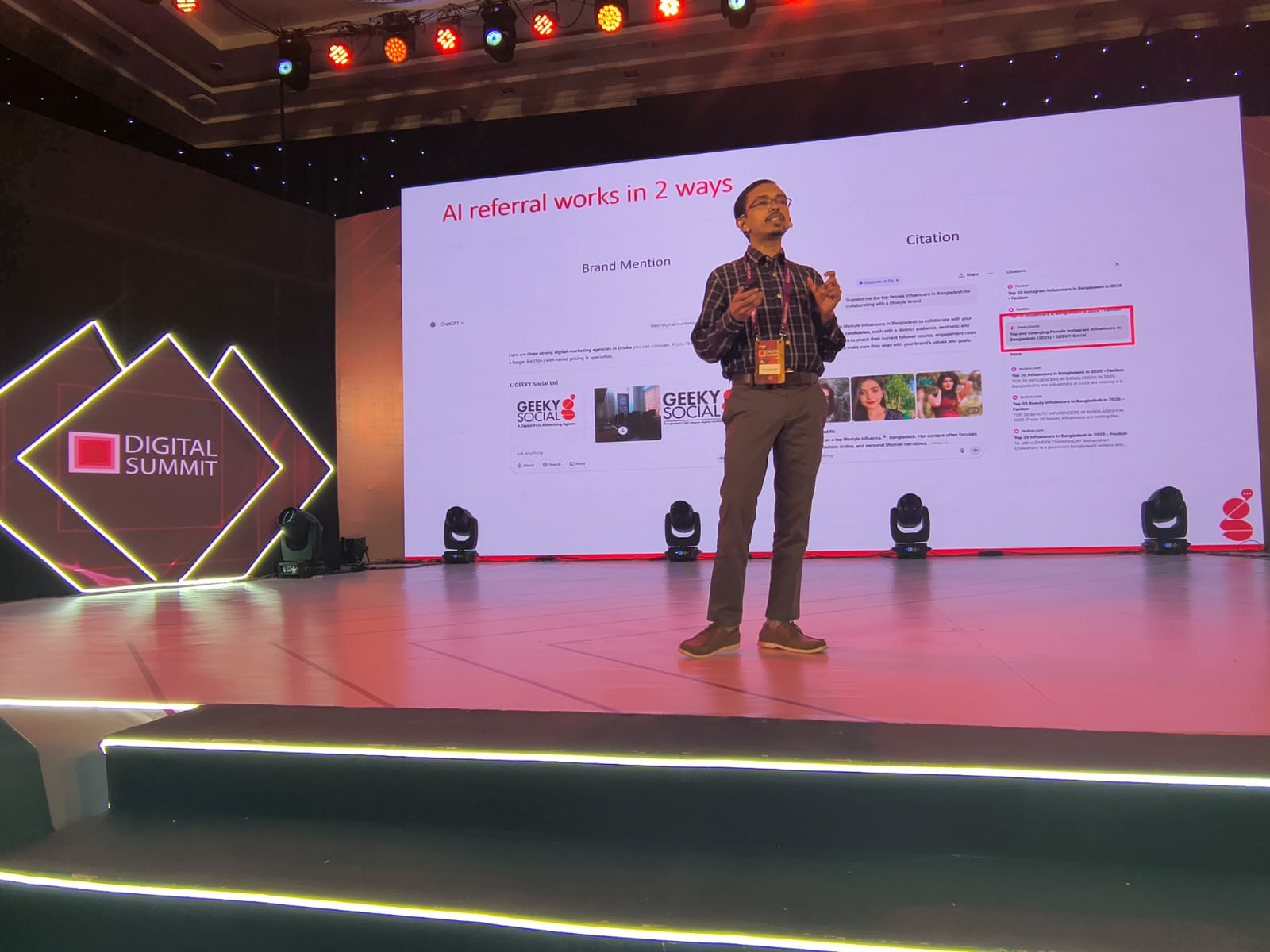

On 20th June 2026, GEEKY Social’s Managing Director, Mahadi Hasan Sagor, delivered a session at Digital Summit 2026 on how the user funnel has shifted from SEO to AEO.
During the session, he explained how consumer behavior has fundamentally changed in the age of AI-powered search and recommendation systems. As people increasingly rely on AI assistants, recommendation engines, reviews, communities and social platforms to make decisions; brands must rethink how they approach visibility and discoverability online.
How the User Funnel has Changed in the AI Era
Traditionally, marketers viewed the customer journey as a linear path. Today, that journey is far more dynamic and fragmented.
Modern consumers often follow a journey like:
See → Search → Verify → Ask → Compare → Decide
Rather than moving through these stages once, users frequently repeat them multiple times before making a purchase decision.
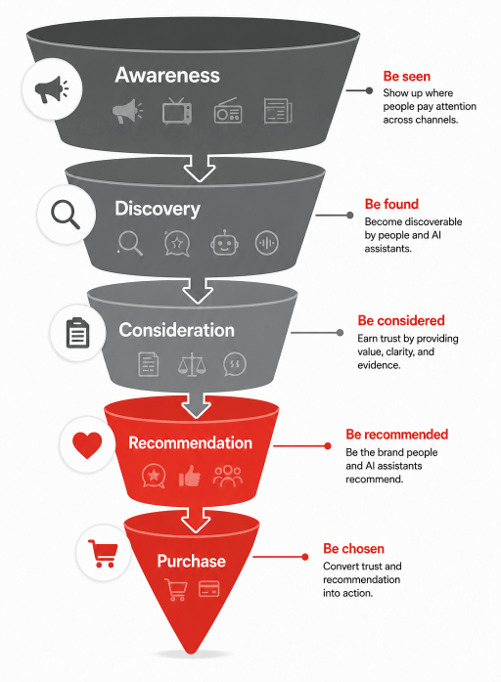
User Funnel in the AI era (Image developed with ChatGPT)
The funnel has evolved into a continuous loop of prompts, proof and peer signals. Discovery is no longer predictable or linear. A customer may discover a product on Facebook, verify information through Google, watch YouTube reviews, ask questions in online communities, compare ratings and then consult an AI assistant before making a decision.
Why Search Engines are Becoming Recommendation Engines
Search behavior itself has changed significantly.
Previously, users searched using short keyword phrases such as:
“Best running shoes”
Today, users ask detailed and contextual questions like:
“What running shoes should I buy for marathon training?”
In response, platforms no longer simply display a list of links. Instead, they provide recommendations, summaries and guided answer paths. The platform increasingly determines which products, brands and sources deserve visibility.
As a result, search engines are gradually evolving into recommendation engines.
Why Traditional SEO is No Longer Enough
Traditional SEO remains important, but it is no longer sufficient on its own.
For years, marketers focused on ensuring websites were crawlable, indexable and rankable. While those fundamentals still matter, AI-powered discovery introduces a new challenge.
Brands must now ensure that their products, services and content are understandable, trustworthy and recommendable by AI systems.
As users ask increasingly specific questions, AI platforms generate direct answers based on the information they trust. This means visibility depends not only on rankings but also on whether a brand can be confidently cited and recommended.
What Does It Mean to Be Citable and Recommendable?
One of the key messages shared by Mr. Sagor was that brands should shift their focus from asking:
“Is our website crawlable and rankable?”
to asking:
“Is our product and its features citable and recommendable?”
He emphasized that recommendation has become the new form of visibility in the AI era.
As he stated during the session:
“When people recommend a product, it’s also recommended by AI.”
The more frequently a brand is mentioned, reviewed, discussed and referenced across trusted sources, the more likely it is to be surfaced by AI systems.
Why AI-Referred Traffic is More Valuable
AI-generated referrals are proving to be highly valuable for businesses. Average session duration is higher from traffic coming from AI referrals.
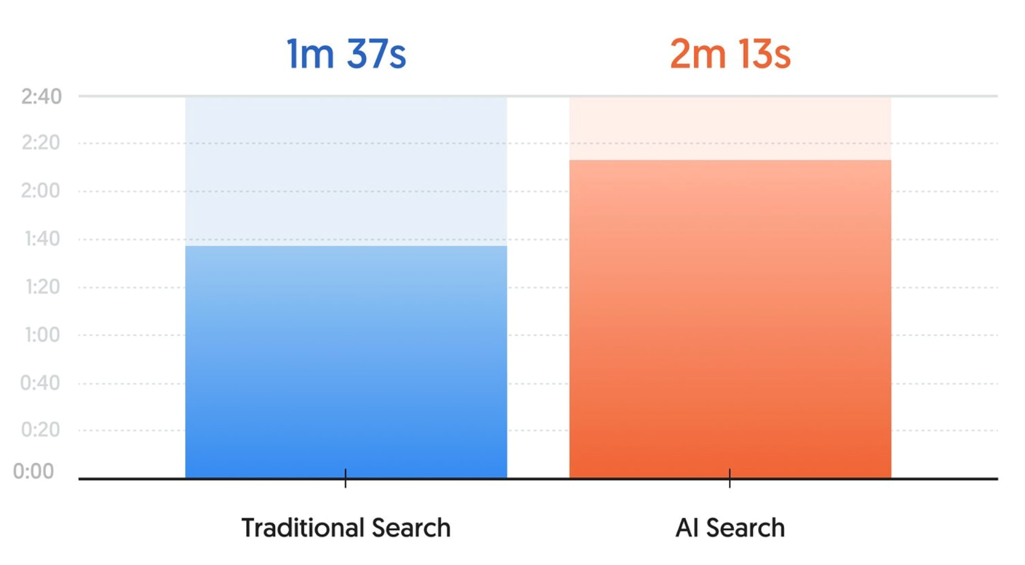
Infographic Credit: NP Digital
According to insights shared during the session, visitors arriving from AI recommendations tend to spend more time on websites, engage more deeply with content and convert faster than many traditional traffic sources.
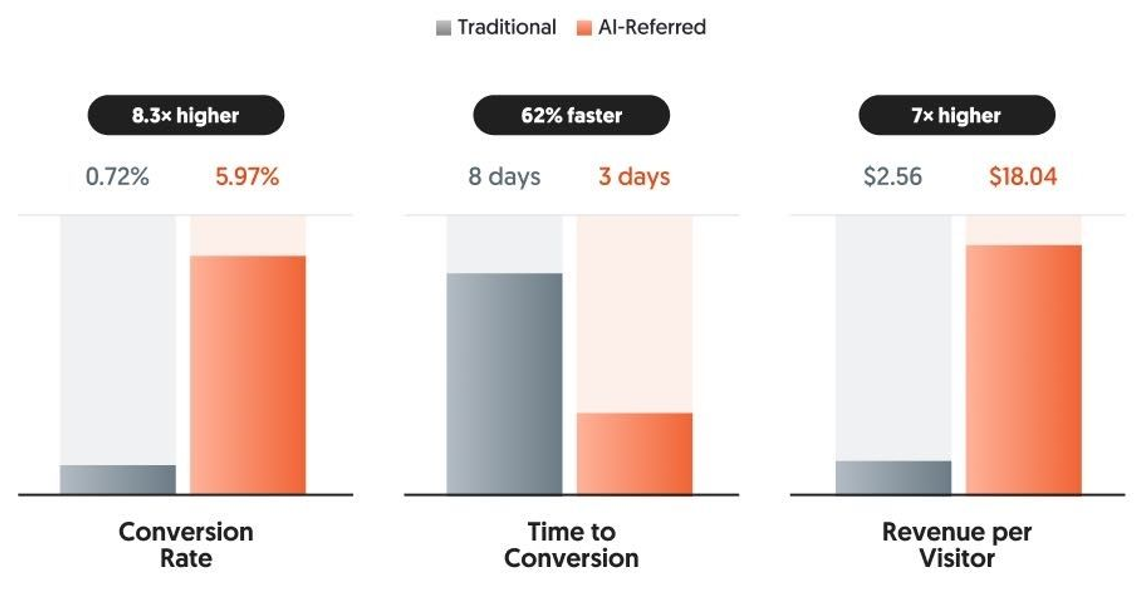
Infographic Credit: NP Digital
This happens because users often arrive after completing much of their research process. By the time they click through from an AI recommendation, they typically have stronger intent and a clearer understanding of what they are looking for.
As a result, AI-referred traffic often represents higher-quality visitors with stronger purchase or conversion intent.
What Is Answer Engine Optimization (AEO)?
Answer Engine Optimization (AEO) begins where traditional SEO becomes incomplete.
AEO is the process of making a brand, product and content easier for AI systems to understand, trust, cite and recommend.
While SEO focuses on improving visibility in search results, AEO focuses on increasing visibility within AI-generated answers, recommendations and summaries.
As AI assistants become an increasingly important part of the customer journey, AEO is emerging as a critical discipline for brands seeking long-term digital visibility.
How Do AI Referrals Work?
AI referrals generally occur in two ways:
- Brand Mentions: A brand mention occurs when an AI chatbot references a company, product or service within its response without necessarily linking to a source.
- Citations: A citation occurs when an AI system directly references or sources information from a brand’s website, blog, product page or published content.
Both brand mentions and citations contribute to visibility within AI ecosystems and play an important role in influencing future recommendations.
What Should Brands Do Next?
The shift from SEO to AEO does not mean SEO is disappearing. Rather, it means that discoverability is expanding beyond traditional search rankings.
Brands that invest in trustworthy content, strong product positioning, authoritative mentions, customer proof and high-quality information will be better positioned to earn both human recommendations and AI recommendations.
As search evolves into answers and recommendations, the brands that become the most citable and recommendable will be the ones that remain visible in the next generation of digital discovery.